Tanning bed laws vary enormously depending on where you live. In some countries, commercial sunbeds are banned outright. In others, a teenager can walk into a tanning salon with no questions asked. The patchwork of regulations reflects an ongoing global conversation about how to balance personal choice with public health — and the evidence behind these laws is now substantial enough that the direction of travel is clear.
Why Tanning Beds Are Regulated at All
In 2009, the World Health Organization's International Agency for Research on Cancer (IARC) reclassified UV-emitting tanning devices from Group 2A ("probably carcinogenic") to Group 1: carcinogenic to humans. This is the highest possible risk category — the same classification given to tobacco smoke, asbestos, and plutonium.
The evidence is substantial. A landmark meta-analysis found that first using a tanning bed before the age of 30 increases melanoma risk by up to 75%. The American Academy of Dermatology puts the figure at roughly 50% increased risk for those who start before age 20. High-frequency users (10 or more sessions per year) face even steeper odds, with studies reporting relative risk increases of 52% or more.
The UV output of commercial sunbeds is the core concern. Most devices emit 93–97% UVA at intensities 10 to 15 times higher than the midday summer sun. Some high-pressure units produce an effective UV index of up to 36 — nearly three times the most extreme natural sunlight recorded on Earth. This concentrated UVA exposure drives DNA damage, premature ageing, and melanoma risk far more efficiently than casual sun exposure.
Countries with Total Bans
Three countries have banned commercial tanning beds entirely — for all ages, no exceptions.
| Country | Year of full ban | Key details |
|---|---|---|
| Brazil | 2009 | First country to impose a total ban. Operating a commercial sunbed is a criminal offence. |
| Australia | 2016 | Phased in state by state from 2013; all six states completed the ban by 1 January 2016. |
| Iran | — | Full commercial ban in place; limited public data on enforcement. |
Australia's results
Australia's ban is the most studied. Before legislation, 2.5% of adolescents and 13.8% of adults aged 25–44 reported sunbed use. By 2017 — just one year after the nationwide ban took effect — adult sunbed use had dropped to less than 1%. Research published in the British Journal of Dermatology concluded that the ban is projected to prevent thousands of melanoma cases over the coming decades, making it one of the most impactful skin cancer prevention policies ever implemented.
Tanning Bed Laws in Europe
Europe has no single EU-wide regulation on sunbed use, but most member states have introduced their own restrictions. France was the pioneer, banning under-18s from indoor tanning as early as 1997. Since then, the trend has been towards stricter controls.
| Country | Under-18 ban | Additional restrictions |
|---|---|---|
| France | Yes (since 1997) | Advertising health benefits prohibited |
| United Kingdom | Yes (since 2010) | Sunbeds (Regulation) Act — no parental consent exception |
| Germany | Yes | UV Protection Ordinance regulates device output |
| Spain | Yes | Restrictions on commercial operation |
| Austria | Yes | Under-18 ban enforced |
| Belgium | Yes | Under-18 ban enforced |
| Portugal | Yes | Under-18 ban enforced |
| Italy | Partial | Prohibited for fair-skinned individuals and pregnant women |
| Ireland | Yes | Special offers and promotions to encourage repeated visits banned |
| Poland | No age ban | Total ban on advertising for artificial tanning devices |
The UK's approach is notable for its simplicity: the Sunbeds (Regulation) Act 2010 makes it illegal for anyone under 18 to use a commercial sunbed in England and Wales, with equivalent legislation in Scotland and Northern Ireland. There is no parental consent override — the ban is absolute. Operators who allow minors to tan face fines.
In 2023, the European Cancer Organisation called for a comprehensive EU-wide ban on commercial sunbeds, citing the IARC classification and the uneven patchwork of national rules. As of 2026, no unified regulation has been adopted, but pressure is building.
Tanning Bed Laws in the United States
The US has no federal ban on tanning bed use by minors. The FDA proposed one in 2015, but withdrew the proposal in March 2026, leaving regulation entirely to individual states.
The result is a stark patchwork:
- 22 states and Washington D.C. ban all minors under 18 from indoor tanning
- 12 states allow minors to use tanning beds with parental involvement (consent or accompaniment)
- 18 states and Puerto Rico have no age restrictions at all
States with the strictest laws include California, Delaware, Illinois, Kansas, Minnesota, New York, Oregon, and Vermont, all of which prohibit any minor from using a commercial tanning device regardless of parental consent.
The FDA does classify sunlamp products as Class II medical devices and requires a black-box warning on all tanning beds stating that the device should not be used by anyone under 18. However, this is a labelling requirement, not an enforceable ban — compliance depends on state law and salon operators.
Tanning Bed Laws in Canada, New Zealand and Beyond
Canada has moved aggressively at the provincial level. All provinces and territories except two have introduced strict under-18 or under-19 bans:
- Ontario, Quebec, Manitoba, Saskatchewan, Alberta, British Columbia, and Prince Edward Island prohibit use by anyone under 18
- Nova Scotia, New Brunswick, Newfoundland and Labrador, and the Northwest Territories set the age limit at 19
New Zealand banned sunbed use for anyone under 18 in January 2017, following a public health campaign and evidence review.
Several other countries have introduced partial restrictions. South Korea requires health warnings and restricts advertising. Japan has voluntary industry guidelines but no legislation. Many countries in Africa, South America, and Southeast Asia have no specific sunbed legislation, largely because commercial indoor tanning is far less prevalent in those regions.
The Direction of Travel
The global trend is unmistakable: regulations are getting stricter. Between 2003 and 2023, the number of jurisdictions with some form of tanning bed legislation more than doubled. 49 jurisdictions worldwide now have advertising restrictions for indoor tanning. No country that has introduced a ban or restriction has reversed it.
The evidence continues to mount. A 2025 study from Northwestern Medicine found that tanning bed use was linked to a nearly threefold increase in melanoma risk (odds ratio: 2.85), with a clear dose-response relationship — more sessions mean higher risk. For early-onset melanoma (before age 50), the association was even stronger.
If you are using a tanning bed, it is worth knowing exactly what the law says where you live — and, more importantly, what the science says regardless of the law. Regulations exist because the evidence that indoor tanning causes cancer is no longer debatable. How you respond to that evidence is a personal decision, but it should be an informed one.
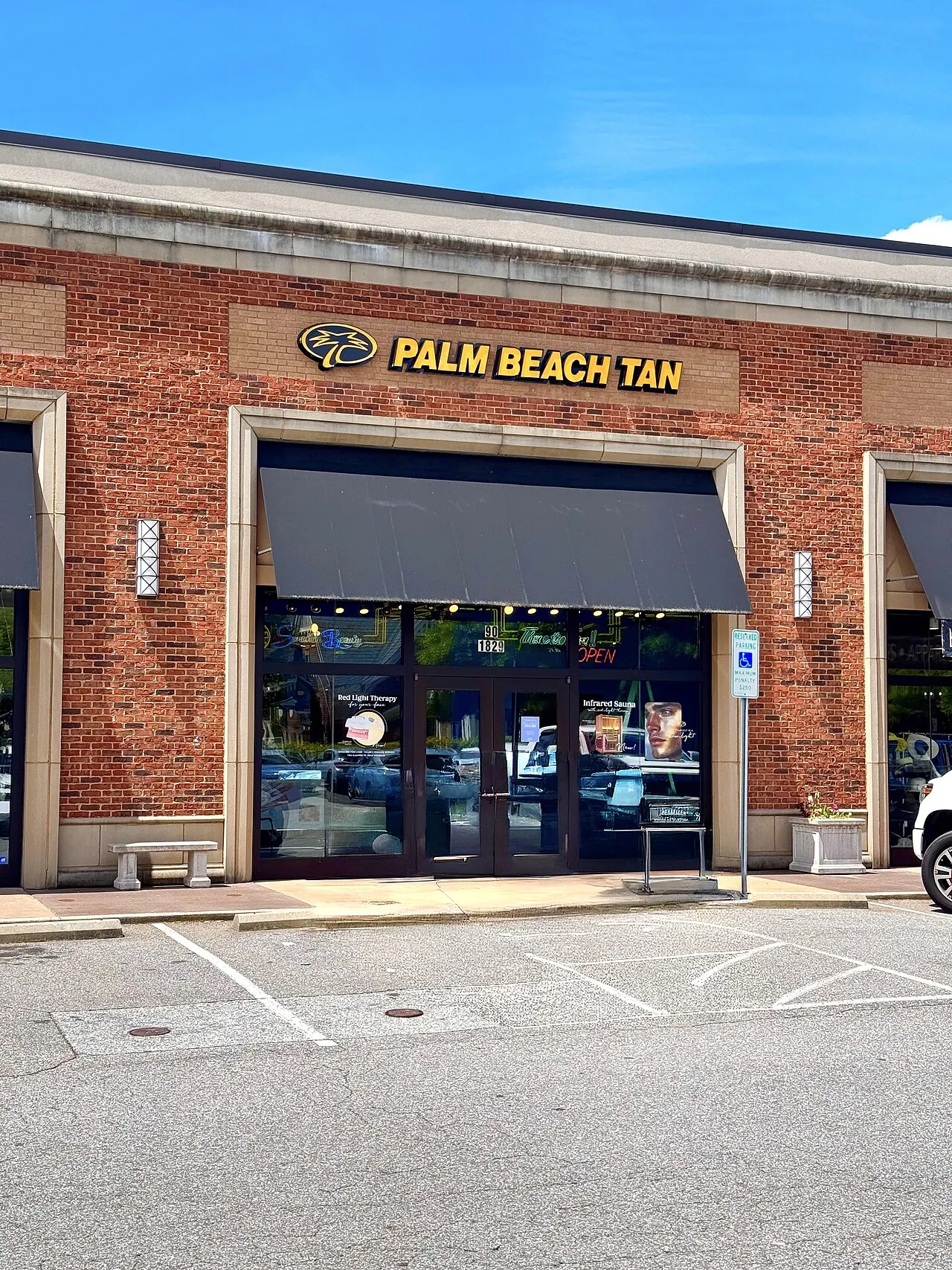
Image: A commercial tanning salon storefront in Asheville, North Carolina — Harrison Keely via Wikimedia Commons, CC BY 4.0.
Sources
- IARC. UV tanning beds moved to highest cancer risk category. 2009.
- Lachenmeier DW et al. Tanning Bed Legislation for Minors: A Comprehensive International Comparison. Children, 2022.
- Lachenmeier DW et al. Global Tanning Bed Advertising: A Comparison of Legal Regulations. Cancers, 2023.
- Gordon LG et al. Experience from an outright ban of commercial sunbeds in Australia. British Journal of Dermatology, 2020.
- Gordon LG et al. Consequences of banning commercial solaria in 2016 in Australia. Health Policy, 2020.
- Ghiasvand R et al. Indoor Tanning and the Risk of Overall and Early-Onset Melanoma: Systematic Review and Meta-Analysis. Cancers, 2021.
- Stante GC et al. Indoor tanning triples melanoma risk and seeds broad DNA mutations. Science, 2025.
- FDA. FDA Drops Plan To Ban Tanning Beds for Minors Nationwide. 2026.
- Skin Cancer Foundation. Indoor Tanning Legislation: Here's Where We Stand.
- WHO. More can be done to restrict sunbeds to prevent increasing rates of skin cancer. 2017.
Know when to go out, and for how long
SafeTanning reads your local UV forecast and times each session by the UV dose your skin type can take, keeping every session below half your burn dose.
Download on the App StoreFrequently asked questions
Which countries have banned tanning beds completely?
Three countries have imposed total bans on commercial tanning beds for all ages: Brazil (2009), Australia (2016), and Iran. In these countries, operating a commercial sunbed is illegal regardless of the customer's age. Australia's ban led to a dramatic drop in sunbed use — from 13.8% of adults aged 25–44 in 2006 to less than 1% by 2017.
Can minors use tanning beds in the UK?
No. The Sunbeds (Regulation) Act 2010 bans commercial sunbed use for anyone under 18 in England and Wales, with equivalent laws in Scotland and Northern Ireland. There is no parental consent exception — the ban is absolute. Tanning salon operators who allow under-18s to use their equipment can face fines.
Is there a federal tanning bed ban for minors in the United States?
No. The FDA proposed a nationwide ban on tanning bed use for under-18s in 2015, but withdrew the proposal in March 2026. Regulation remains state-by-state: 22 states and Washington D.C. ban all minors from indoor tanning, while 18 states and Puerto Rico have no age restrictions at all.
Why are tanning beds classified as Group 1 carcinogens?
In 2009, the International Agency for Research on Cancer (IARC) — part of the WHO — reclassified UV-emitting tanning devices as Group 1: carcinogenic to humans. This is the highest cancer risk category, shared with tobacco smoke and asbestos. The decision was based on sufficient evidence linking indoor tanning to melanoma and ocular melanoma, with risk increasing by up to 75% when use begins before age 30.
Do tanning bed laws actually reduce skin cancer rates?
Early evidence suggests yes. After Australia's total ban in 2016, reported sunbed use among adults dropped from over 13% to less than 1%. Research published in the British Journal of Dermatology projects that the ban will prevent thousands of melanoma cases over the coming decades. In the US, states with under-18 bans have seen measurable declines in adolescent indoor tanning rates.
Written with AI assistance from the sources listed, and checked against how SafeTanning works. This is general information, not medical advice. Spotted something wrong or out of date? Tell us at hello@safetanning.app.