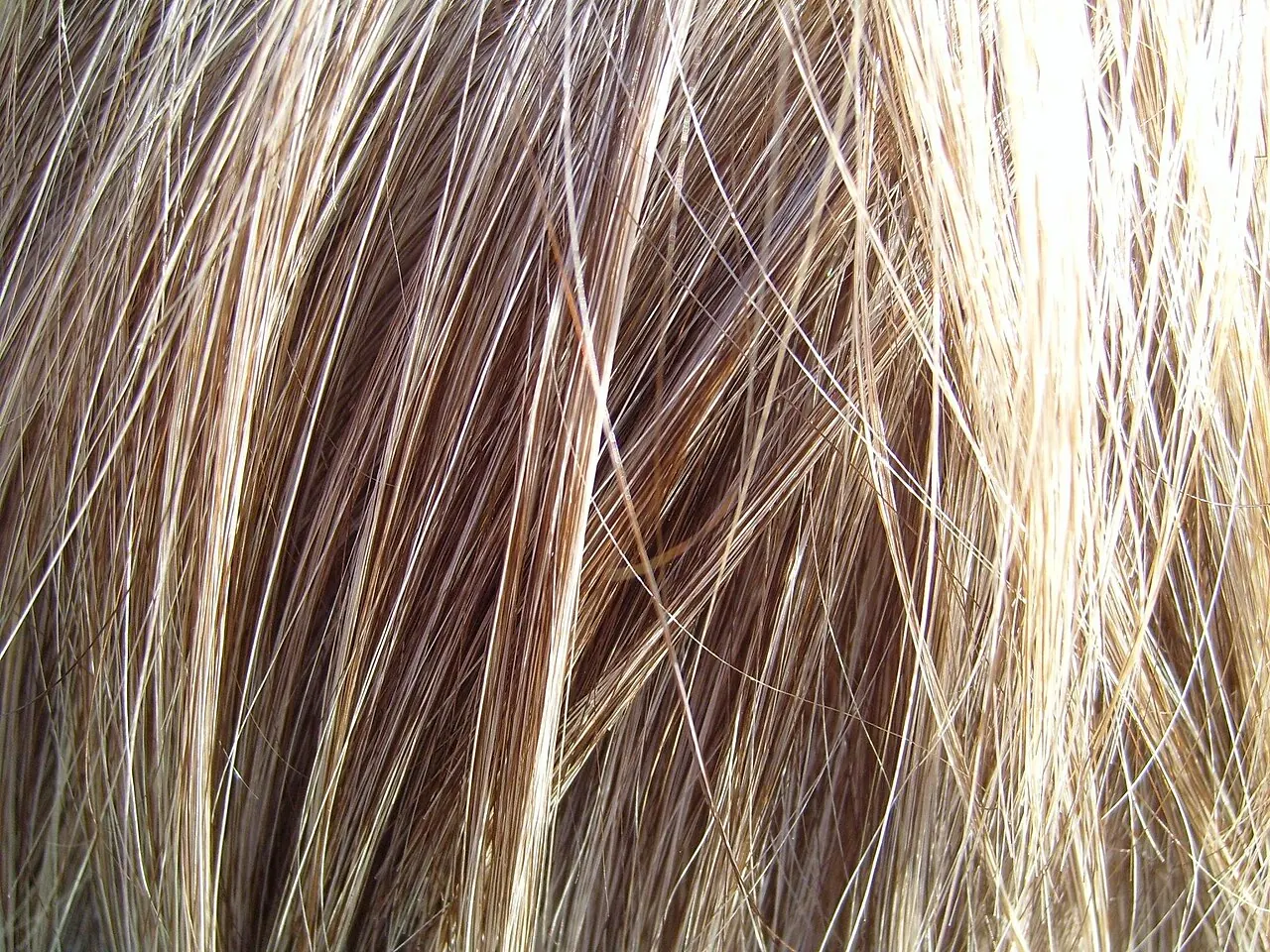
If you have ever noticed your hair getting lighter over the course of a summer, you are witnessing a real photochemical process — not just your imagination. Sun exposure changes your hair in two distinct ways: it lightens the colour through melanin breakdown, and it damages the protein structure that keeps strands strong and smooth. Unlike skin, hair cannot repair itself once the damage is done, which makes understanding UV's effects on hair genuinely important for anyone spending time outdoors.
How UV Radiation Lightens Hair: Photobleaching
The lightening effect of sun exposure on hair is caused by a process called photobleaching. Hair colour comes from melanin — the same pigment that colours skin — embedded in the cortex, the inner structural layer of each hair strand. When UV radiation, particularly UVA and visible light (wavelengths between 320–800 nm), penetrates through the outer cuticle and reaches the cortex, it triggers the oxidation and chemical degradation of melanin molecules.
This process works through multiple pathways. UV radiation generates free radicals and reactive oxygen species — including singlet oxygen and hydrogen peroxide — that attack melanin's chemical structure. The melanin molecules are progressively broken down into smaller, colourless compounds. Because hair is dead keratinised tissue, it cannot produce new melanin to replace what is lost. The lightening effect is therefore cumulative: the more sun exposure, the lighter the hair becomes.
Research has shown that black hair begins to lighten visibly after roughly 300 hours of simulated sunlight exposure, while blonde hair tends to develop a yellowish tone after a similar duration. The rate and degree of lightening depend on your natural hair colour, porosity, and total UV dose.
| Hair colour | Melanin type | Photobleaching speed | Visible result |
|---|---|---|---|
| Black/dark brown | Eumelanin (high) | Slower — melanin acts as UV filter | Gradual warm or reddish shift |
| Medium brown | Eumelanin (moderate) | Moderate | Lighter brown, golden highlights |
| Dark blonde/light brown | Mixed eu/pheomelanin | Faster | Noticeably lighter, sun-streaked |
| Blonde | Pheomelanin (dominant) | Fastest | Yellowing, then platinum shift |
| Red | Pheomelanin (high) | Fast | Fading to strawberry or copper |
How UV Damages Hair Structure
While the colour change gets the most attention, the structural damage UV causes to hair is arguably more significant. Hair is built from a protein called keratin, held together by strong disulphide bonds between sulphur-containing amino acids — primarily cystine. These bonds are what give hair its tensile strength and elasticity.
UVB targets the cuticle
UVB radiation (295–315 nm) is absorbed primarily within the outermost 5 micrometres of the hair shaft — the cuticle layer. It breaks down disulphide bonds by oxidising cystine into cysteic acid, a weaker compound that cannot maintain the same structural integrity. UVB also degrades other photosensitive amino acids including tryptophan, tyrosine, methionine, and histidine.
The result is a cuticle that becomes increasingly rough, lifted, and porous. This is why sun-exposed hair feels dry and coarse — the protective outer layer has been chemically eroded.
UVA penetrates deeper into the cortex
UVA radiation (315–400 nm) and visible light have longer wavelengths and penetrate through the cuticle into the cortex. Here, they attack both the melanin (causing the lightening described above) and the keratin proteins that form the cortex's intermediate filaments. Research shows that UVA is the primary driver of colour change, while UVB causes 2 to 5 times more protein damage than UVA, depending on hair type.
| UV type | Penetration depth | Primary target | Main effect |
|---|---|---|---|
| UVB (295–315 nm) | ~5 μm (cuticle) | Keratin proteins, disulphide bonds | Protein loss, cuticle erosion, brittleness |
| UVA (315–400 nm) | Through cuticle into cortex | Melanin, cortex proteins | Colour change, internal structural weakening |
| Visible light (400–800 nm) | Deep into cortex | Melanin | Photobleaching, gradual lightening |
The Melanin Paradox: Dark Hair Loses More Protein
Here is a counterintuitive finding from the research: dark and black hair experiences greater protein loss in the cuticle than lighter hair when exposed to the same UV dose. The reason is that darker hair contains more photosensitive amino acids — the very compounds that UV radiation targets for degradation.
However, melanin also plays a protective role. It absorbs UV radiation before it can reach deeper structures and immobilises free radicals before they can attack the keratin matrix. So while the cuticle of dark hair suffers more protein loss, the cortex beneath is better protected by the melanin shield.
Lighter and chemically bleached hair, by contrast, has less melanin to act as a UV filter. This means UV radiation penetrates deeper and causes more widespread structural damage throughout the hair shaft — which is why blonde and colour-treated hair tends to feel the driest and most brittle after prolonged sun exposure.
Why Hair Cannot Repair Sun Damage
This is the critical difference between hair and skin. Your skin is living tissue — when UV damages skin cells, the body mounts a repair response involving DNA repair enzymes, inflammation, and increased melanin production. Hair, once it emerges from the follicle, is biologically dead. There are no living cells, no blood supply, and no repair mechanisms.
Every broken disulphide bond, every oxidised amino acid, every degraded melanin molecule in the hair shaft is permanent damage in that section of hair. Conditioning treatments and keratin products can temporarily fill gaps and smooth the cuticle surface, improving the way damaged hair looks and feels — but they do not rebuild the original protein architecture. The only genuinely undamaged hair is new growth from the follicle.
This is why cumulative sun exposure matters so much for hair health. A single afternoon will not visibly damage healthy hair, but a full summer of daily UV exposure without protection can leave the outer third of long hair noticeably weaker, drier, and more prone to breakage than the newer growth near the roots.
How to Protect Your Hair from UV Damage
The good news is that hair protection from UV is straightforward and does not require expensive products.
Physical barriers are most effective
A wide-brimmed hat or tightly woven scarf blocks UV radiation entirely — no chemical filter needed. This is the single most effective way to protect both your hair and your scalp. Hats made from dark, tightly woven fabric or purpose-made UPF 50+ materials block over 98% of UV.
UV-protective hair products
Leave-in conditioners and hair sprays containing UV filters can reduce UV penetration into the hair shaft. These work similarly to sunscreen — they either absorb or reflect UV before it reaches the keratin and melanin. Look for products that specifically mention UV or solar protection on the label.
Pre-swim protection
If you are swimming outdoors, rinse your hair with fresh water before entering the pool or sea. Saturated hair absorbs less chlorine or salt water, both of which compound UV damage. Applying a light layer of argan oil, coconut oil, or a silicone-based serum before sun exposure can also reduce UV penetration and moisture loss.
After-sun care
After a day in the sun, use a moisturising conditioner or hair mask to temporarily restore hydration to the cuticle. This will not undo protein damage, but it reduces further breakage by keeping the cuticle smoother and less prone to friction damage.
Image: Close-up of sun-lightened blonde hair — Titus Tscharntke via Wikimedia Commons, public domain.
Sources
- Fernández E et al. UV Damage of the Hair. Photochemistry and Photobiology, 2012.
- Ramos S et al. Impact of Ultraviolet Radiation-Induced Damage to Hair Fibre Integrity. International Journal of Cosmetic Science, 2025.
- Draelos ZD. Hair, Sun, Regulation, and Beauty. Journal of Cosmetic Dermatology, 2014.
- Trüeb RM. The Impact of Oxidative Stress on Hair. International Journal of Cosmetic Science, 2015.
- Ratnapandian S et al. Effect of Photodamage on the Outermost Cuticle Layer of Human Hair. Journal of Photochemistry and Photobiology B, 2016.
- Nogueira ACS, Joekes I. Hair Color Changes and Protein Damage Caused by Ultraviolet Radiation. Journal of Photochemistry and Photobiology B, 2004.
- Cleveland Clinic. How to Protect Your Hair from Sun Damage.
Know when to go out, and for how long
SafeTanning reads your local UV forecast and times each session by the UV dose your skin type can take, keeping every session below half your burn dose.
Download on the App StoreFrequently asked questions
Does the sun actually lighten your hair?
Yes. UV radiation breaks down melanin in the hair shaft through a process called photobleaching. Unlike skin, hair is dead tissue and cannot produce new melanin to replace what is lost — so the lightening effect accumulates with continued exposure. The result is the characteristic sun-bleached look that develops gradually over a summer.
Is sun-lightened hair damaged hair?
Yes. The same UV radiation that lightens hair colour also degrades the keratin proteins that give hair its strength. UVB breaks disulphide bonds in the cuticle, while UVA penetrates deeper into the cortex and oxidises melanin. The visible lightening is one sign of this damage — increased dryness, brittleness, and split ends are others.
Does darker hair suffer more sun damage than lighter hair?
Dark and black hair actually experiences greater protein loss in the cuticle than lighter hair, because it contains more photosensitive amino acids. However, the melanin in dark hair also acts as a UV filter for the cortex beneath, so the inner structure is somewhat better protected. Lighter hair is more susceptible to visible colour changes and overall structural weakening.
Can hair repair itself after sun damage?
No. Hair is composed of dead keratinised cells and has no biological repair mechanism. Once UV radiation breaks down proteins or melanin in the hair shaft, the damage is permanent in that section of hair. Conditioning treatments can temporarily smooth the cuticle and improve appearance, but they do not restore the original protein structure. The only true fix is new growth from the follicle.
What is the best way to protect hair from UV damage?
Physical barriers are the most effective protection. A wide-brimmed hat or tightly woven scarf blocks UV from reaching hair entirely. UV-protective hair sprays and leave-in conditioners containing UV filters offer a secondary layer of defence. Rinsing hair with fresh water before swimming reduces chlorine absorption, and applying a natural oil like argan or coconut oil can provide a light protective barrier.
Written with AI assistance from the sources listed, and checked against how SafeTanning works. This is general information, not medical advice. Spotted something wrong or out of date? Tell us at hello@safetanning.app.